The Architecture of Quiet Intelligence
From a candlelit brass orrery in 1766 to the unfolding threshold of Super Intelligence—why the noblest instruments humanity ever builds do not shout for our attention, but illuminate the faces gathered around them.
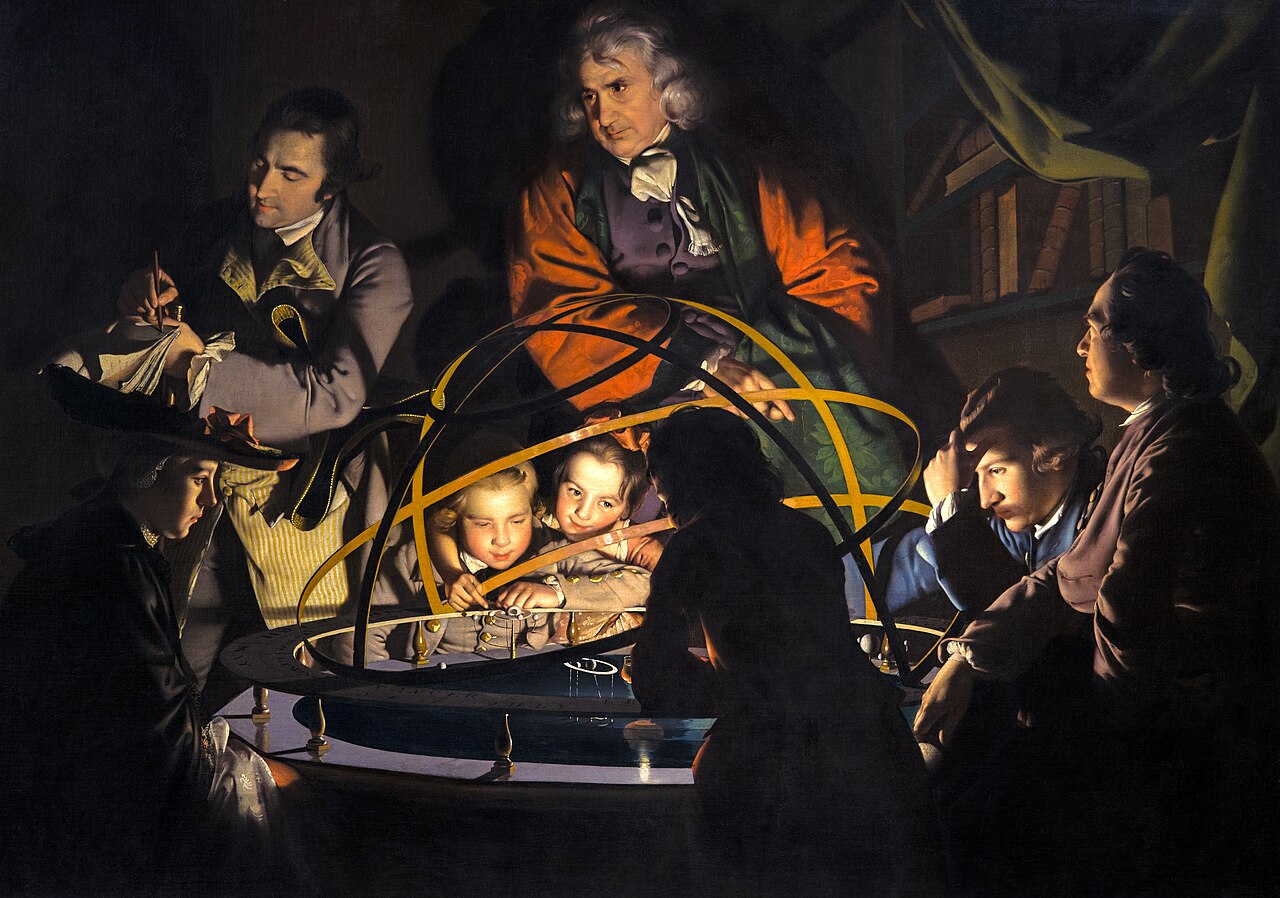
In 1766, the English painter Joseph Wright of Derby completed a canvas whose full title reads almost like a scientific protocol: A Philosopher Giving a Lecture on the Orrery, in Which a Lamp Is Put in Place of the Sun. Inside a darkened study lined with leather-bound volumes, seven figures lean around a circular brass mechanism reproducing the orbits of the planets. Two children rest their elbows along the metallic horizon, faces lifted in unguarded amazement; a young man pauses with pen suspended above a notebook; a silver-haired lecturer looks out over the rings with calm authority. What strikes a modern viewer most vividly is not merely the mastery of chiaroscuro, but the emotional temperature of the room. At the height of the Enlightenment, cutting-edge science did not enter the parlor as an alien monolith or a siren of panic. It entered as a quiet circle of warmth—an instrument that drew human beings closer together so they might contemplate the cosmos in peace.
Two hundred and sixty years later, in November 2026, we stand around an incomparably grander orrery. The brass gears have given way to billion-parameter reasoning networks, differentiable telescope optics, and open molecular models; the darkened parlor has widened to an interconnected planet. Yet our visual and emotional language for the future has grown curiously impoverished. For forty years, every new wave of computing arrived wrapped in the same anxious grammar: harsh neon grids, flashing dashboards, urgent notification badges, and endless cycles of breathless hype shadowed by equally theatrical dread. Somewhere between the eighteenth-century observatory and the twenty-first-century smartphone, we began mistaking noise for power.
From Attention Extraction to Quiet Instruments
The first era of consumer software was economically wedded to interruption. Because platforms sold slivers of human attention by the millisecond, an algorithm grew more profitable the more skillfully it fractured our mornings, provoked outrage, or kept our thumbs scrolling past midnight. That incentive warped our intuition about what artificial intelligence must feel like. Many assumed that Super Intelligence would simply be the same noisy engine turned up to a deafening pitch—faster feeds, louder synthetic media, ever more intrusive prompts competing for every spare breath of consciousness.
Look closely at what is actually taking shape on the serious frontier of 2026, however, and an unexpectedly humane counter-current is coming into view. The highest forms of machine intelligence are beginning to learn restraint. In architecture, a great library or observatory succeeds because its walls recede, allowing natural light and quiet thought to occupy the room. Computation is approaching the same architectural maturity. Compact looped transformers are demonstrating that deep reasoning can live calmly inside a personal workstation on one’s own desk rather than exclusively inside distant megawatt fortresses. Autonomous research workflows are starting to absorb the clerical friction of cross-referencing citations, checking code invariants, and organizing raw literature in the background—returning a single clear page at dawn instead of a hundred restless alerts.
A quiet instrument changes the psychological contract between maker and tool. You do not serve a telescope; you step up to its eyepiece when you wish to see Jupiter’s moons, and when you step back, the silence of the night belongs to you again. As intelligence becomes genuinely capable rather than merely performative, its truest measure stops being how long it captures our gaze and becomes how much uninterrupted, dignified life it gives back.
Four Windows Onto One Horizon
This conviction is the reason yet to.si exists, and why its pages are built around four intertwined windows onto the unfolding century: Intelligence, the Cosmos, Life, and Humanism. Too often these domains are partitioned into mutually suspicious silos—computer scientists speaking only in benchmark deltas, astrophysicists publishing behind dense technical walls, biologists buried in wet-lab attrition, and poets or philosophers retreating into nostalgia as though beauty could survive only by ignoring the tools of the present. Yet out in reality, all four are chapters of the exact same story.
Consider a single month on the calendar we are living through right now. Within three weeks this November, physics-guided optimization subtracted blinding starlight from archived James Webb frames to unveil an exoplanet’s carbon-dioxide signature ninety-six light-years away; the European Space Agency’s Euclid telescope released a foundational map charting more than a billion galaxies across dark cosmic space; open scientific models and chemistry benchmarks entered national laboratories from Argonne to Jülich to RIKEN to accelerate gentle molecular medicine; and open-weights looped architectures showed how a personal computer can fold its own reasoning depth inward across a million tokens of memory.
None of those breakthroughs belongs exclusively to cold engineering. Each one alters our philosophical coordinates. Mapping a billion galaxies forces humility upon our short-term quarrels. Learning the folding grammar of living cells widens the horizon of compassion for bodies that ache and age. Building local, reflective minds invites us to ask what parts of human interiority—grief, promise, craft, the pause between two stanzas of verse—were never mechanical to begin with.
“We especially need imagination in science. It is not all mathematics, nor all logic, but it is somewhat beauty and poetry.”
Why Poetry and Philosophy Belong Inside an Observatory
Without the warmth of poetry and philosophy, even the most astonishing technical horizon quickly turns metallic and cold. Astronomy can measure the distance to Andromeda down to two and a half million light-years, yet it is a line of classical verse—Su Shi floating beneath autumn cliffs in 1082, or a solitary watcher beside a moonlit sea—that teaches a mortal heart how to carry that vastness without feeling erased by it. Artificial intelligence can synthesize ten thousand arguments in a heartbeat, yet philosophy remains the quiet discipline that asks which arguments are worth living by.
Warm Futurism is therefore neither soft escapism nor naive techno-optimism. It is a refusal to surrender the future to its loudest extremes. Between reckless accelerationism that treats human culture as obsolete debris and fatalistic cynicism that greets every scientific milestone with dread, there is a third stance—alert, literate, unhurried, and deeply committed to human dignity. It watches the horizon closely, records real signals with empirical care, and insists that progress must ultimately taste like cleaner air, kinder medicine, wider wonder, and calmer mornings.
What the World Has Yet to See
Return once more to Joseph Wright’s candlelit room in 1766. Look closely at the very center of the brass orrery: the artist deliberately hides the lamp behind the silhouetted back of a young observer in the foreground. We never stare directly into the blinding bulb of the mechanism itself. All we see is the golden radiance flowing outward across the brass rings, catching the open eyes of the children, the folded hands of the listeners, and the quiet pages of the notebook.
That compositional choice holds an entire manifesto for the century ahead. The name yet to.si reads simultaneously as “yet to see” and “yet to SI”—a threshold still arriving, unfinished and open to our stewardship. If we build well, the intelligence of tomorrow will resemble Wright’s hidden lamp: steady at the center, receding from spectacle, asking for none of our worship, and devoted wholly to lighting the human faces gathered around the table as we look out together toward what the world has yet to see.
Continue Reading
Back to Front Page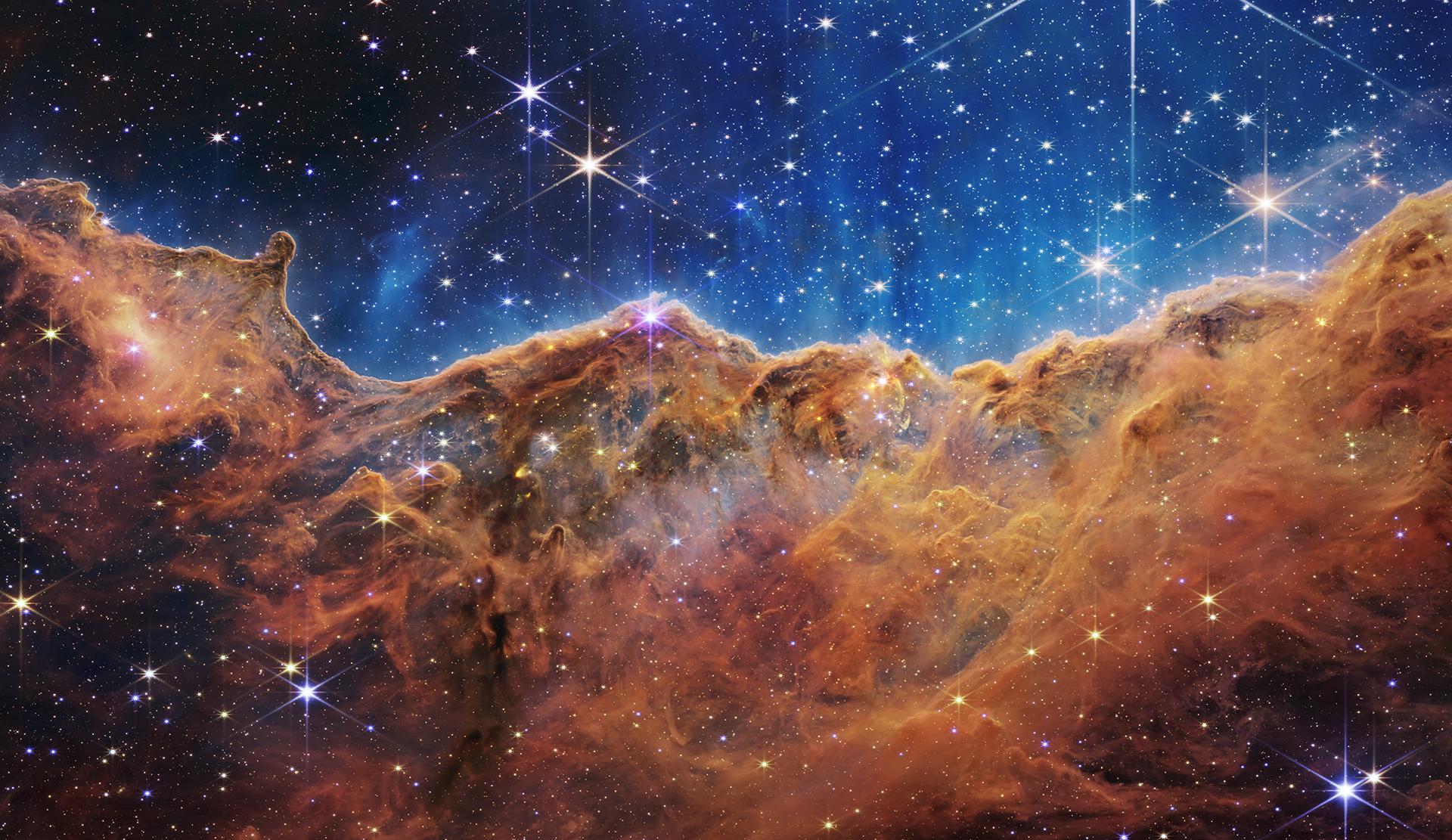
Turning Out the Starlight
In November 2026, a physics-trained algorithm awakened a hidden exoplanet inside two-year-old Webb archives—revealing that seeing deeper into the cosmos now depends as much on subtracting glare as on building larger mirrors.
Depth That Folds Inward
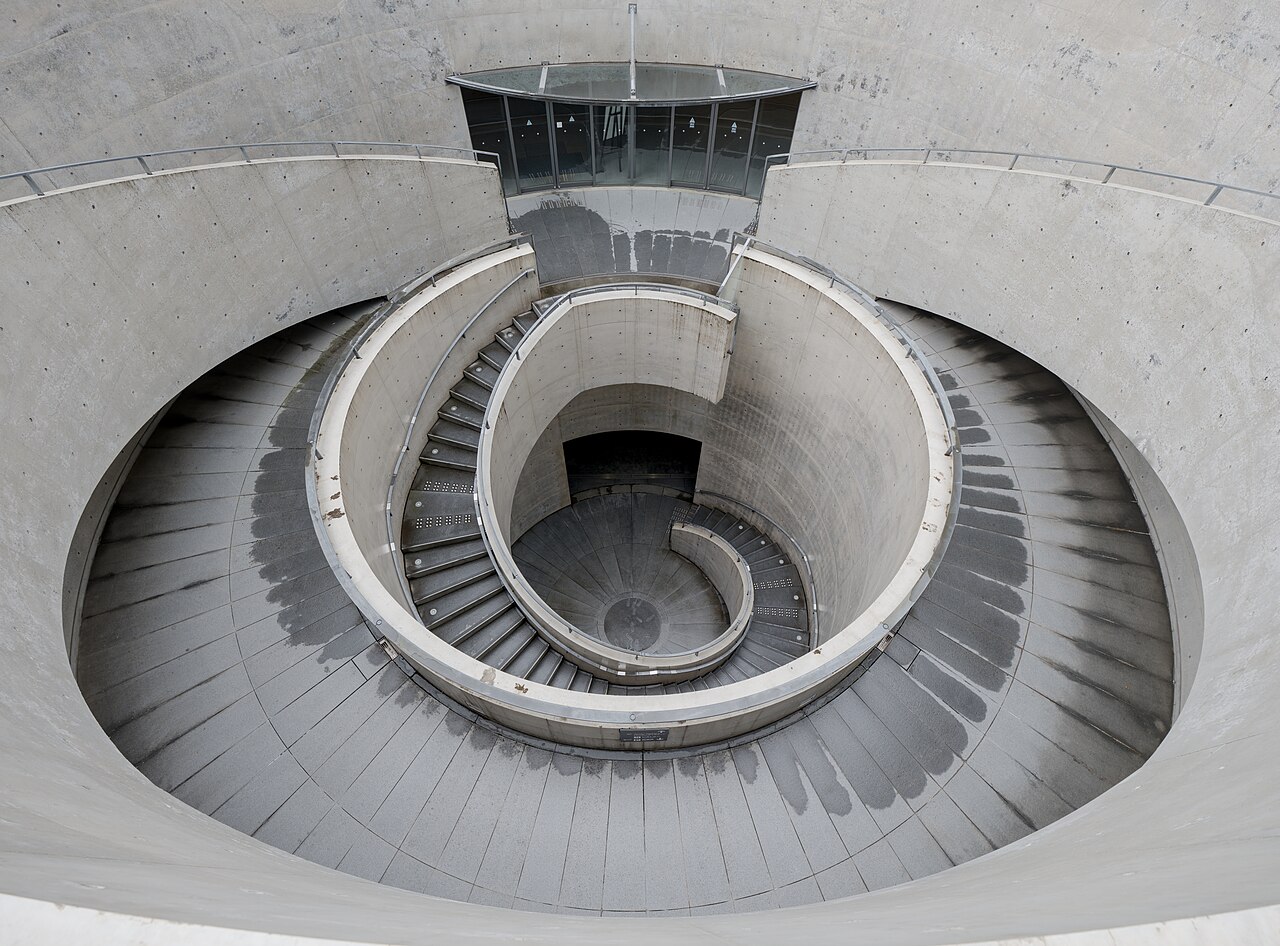
Thinking Machines Lab’s open-weights looped transformer suggests that the next frontier of artificial intelligence may come not from endlessly wider data centers, but from teaching smaller minds to pause and think twice.