Depth That Folds Inward
Thinking Machines Lab’s open-weights looped transformer suggests that the next frontier of artificial intelligence may come not from endlessly wider data centers, but from teaching smaller minds to pause and think twice.
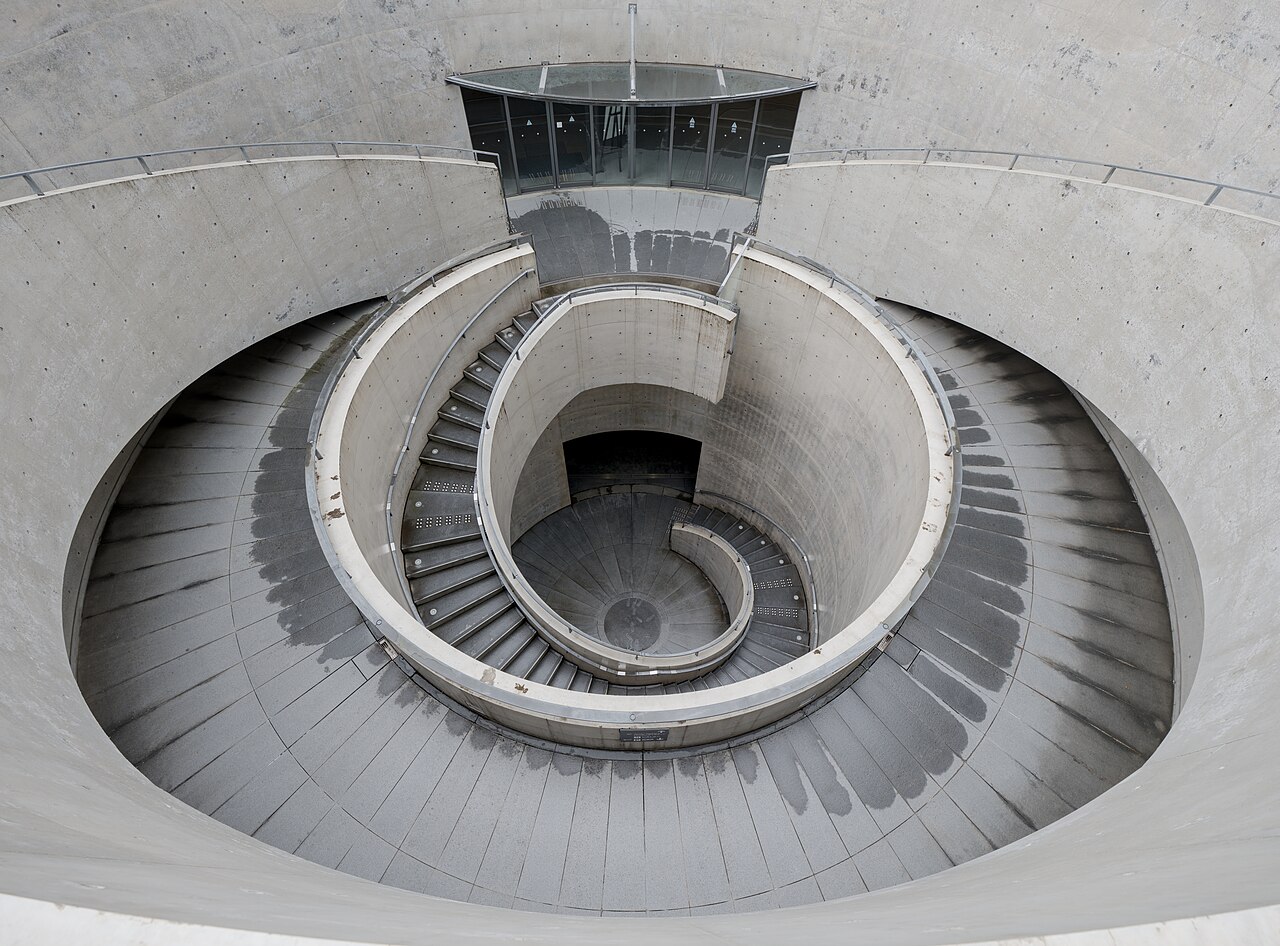
For most of the last decade, the dominant physical image of progress in artificial intelligence has been monumental sprawl: desert substations, football-field halls of liquid-cooled racks, parameter counts climbing into the trillions like glass skyscrapers racing toward the clouds. The underlying intuition was straightforward and brutally effective. If a neural network struggled with a subtle proof or a long document, you stacked more unique layers, widened the matrices, fed it more of the internet, and leased another hundred megawatts. Intelligence, in the first scaling era, looked exclusively outward.
On November 20, 2026, Thinking Machines Lab released an open-weights model under an Apache 2.0 license that quietly proposed a very different geometry. Inkling 2 Mini carries 26.4 billion physical parameters—compact enough, once quantized, to fit inside roughly twenty gigabytes of memory on a single desktop workstation or a thirty-two-gigabyte laptop. Yet when a prompt enters its network, something unusual happens halfway through. The model physically stores only twenty-four decoder layers, arranged like four movements of a chamber piece: a six-layer prelude, a twelve-layer center, and a six-layer coda. Rather than racing straight through those twelve middle layers once, Inkling 2 Mini loops through them three times in succession, reusing the exact same weights while maintaining separate attention memory and learned residual gates between passes. Twenty-four physical layers behave like forty-eight logical layers of depth, across a native context window of one million tokens.
The Difference Between Size and Reflection
Anyone who has walked down one of Tadao Ando’s concrete spiral staircases understands intuitively why folding inward changes a space. A spiral occupies a modest footprint on the earth, yet by turning back over its own axis it creates vertical drama, stillness, and changing angles of light that a flat corridor can never achieve. Looped transformers apply the same architectural economy to thought. Instead of dedicating separate silicon real estate to every single step of inference, the network treats its middle weights as a reusable cognitive workshop—examining a representation once to grasp its surface syntax, a second time to test its latent structure, and a third time to reconcile tensions before speaking.
This is not merely a clever hardware compression trick; it mirrors an ancient distinction in how human minds actually solve hard problems. Memorization is wide—it requires shelving vast libraries of static facts. Understanding is recursive. When a mathematician checks a lemma, or a poet re-reads a stanza aloud the following morning, neither is growing a larger skull overnight. They are passing the same fragile idea back through the same finite cortex, letting each cycle strip away imprecision and surface connections invisible on the first glance.
“Brute scale accumulates answers; recursive depth learns how to question its own first draft.”
Why Local Depth Matters for Human Autonomy
There is a quiet political and cultural consequence tucked inside architectures like Inkling 2 Mini. Throughout 2024 and 2025, as reasoning models migrated behind opaque cloud APIs backed by multi-billion-dollar clusters, an uncomfortable fear settled over independent researchers, writers, and physicians: would meaningful cognitive augmentation become a permanent utility rented exclusively from three or four hyperscale monopolies? Every time you opened a private journal, annotated medical notes, or explored an unfinished philosophical argument, your thinking had to traverse someone else’s servers, subject to silent model swaps, shifting pricing tiers, and corporate terms of service.
When a sparse Mixture-of-Experts model activating only 5.4 billion effective parameters per token can loop its own reasoning depth and hold a million tokens of context inside a quiet machine under your own desk, the balance of gravity begins to shift. A historian in Lisbon can index forty years of handwritten field notebooks offline. A rural clinic can keep patient reasoning completely air-gapped. A writer can keep a lifelong library of drafts, translations, and marginalia inside a silent companion that belongs wholly to them—never throttled, never surveilled, never retired by a product sunset email.
Toward an Aesthetic of Computational Restraint
Giant frontier models are not disappearing; some scientific challenges—simulating global climate coupling or folding entire cellular proteomes—will always call for cathedral-scale supercomputers. Yet just as aviation needed both wide-body transoceanic jets and nimble light aircraft, a healthy civilization of intelligence needs small, deeply reflective local minds alongside monumental cloud engines. What Inkling 2 Mini and its kin demonstrate is that elegance in engineering is returning to center stage. Efficiency is no longer an apologetic compromise for those who cannot afford a cluster; it is a sign that we are finally starting to understand the physics of reasoning rather than merely purchasing it by the megawatt.
Perhaps the quietest irony of late 2026 is that the machines are rediscovering a virtue human culture nearly forgot in its haste: that the deepest insights rarely arrive by moving faster in a straight line. They arrive when a mind—carbon or silicon—turns inward, loops patiently across the same ground once more, and listens for what only reveals itself on the third pass.
Continue Reading
Back to Front Page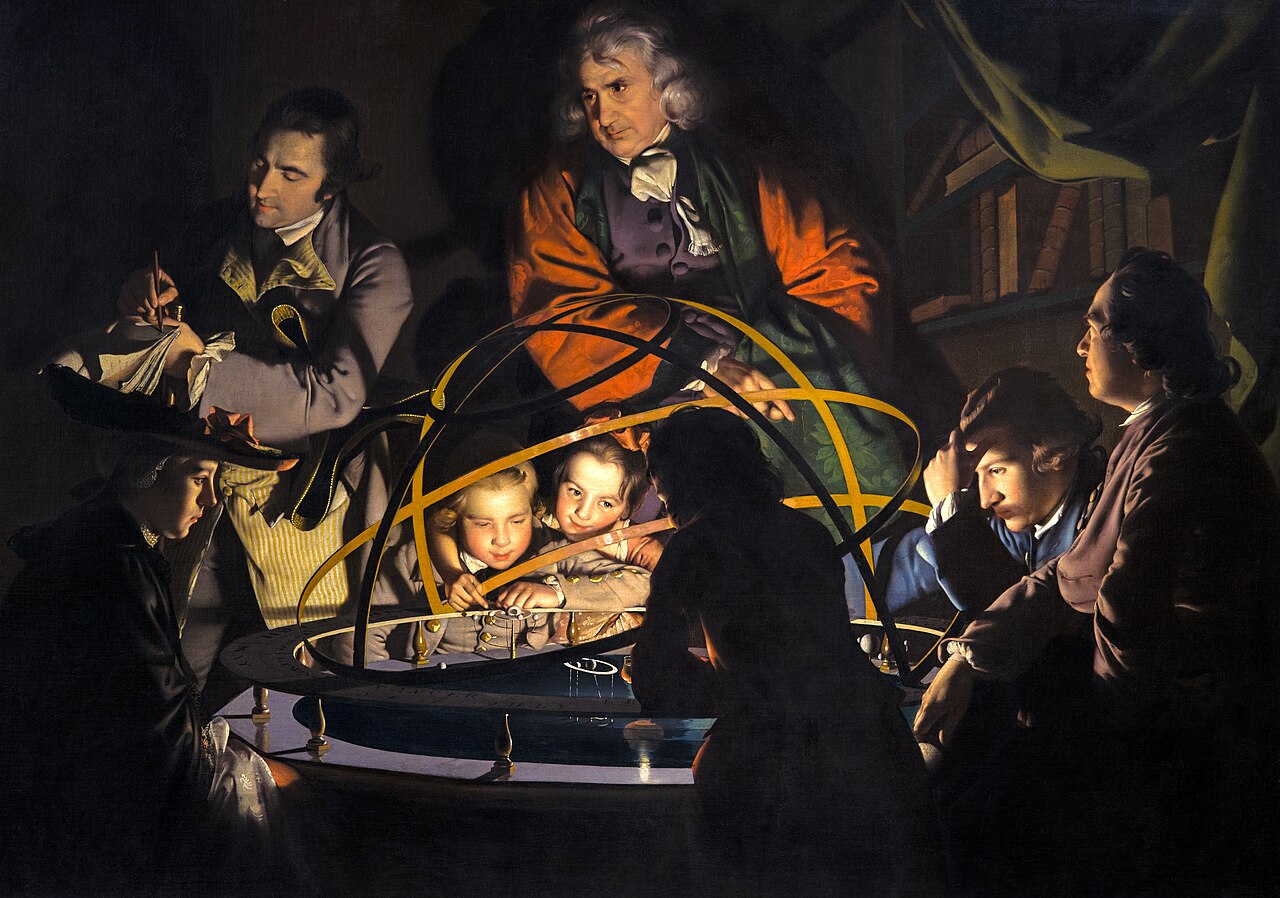
The Architecture of Quiet Intelligence
From a candlelit brass orrery in 1766 to the unfolding threshold of Super Intelligence—why the noblest instruments humanity ever builds do not shout for our attention, but illuminate the faces gathered around them.

Turning Out the Starlight
In November 2026, a physics-trained algorithm awakened a hidden exoplanet inside two-year-old Webb archives—revealing that seeing deeper into the cosmos now depends as much on subtracting glare as on building larger mirrors.