Turning Out the Starlight
In November 2026, a physics-trained algorithm awakened a hidden exoplanet inside two-year-old Webb archives—revealing that seeing deeper into the cosmos now depends as much on subtracting glare as on building larger mirrors.
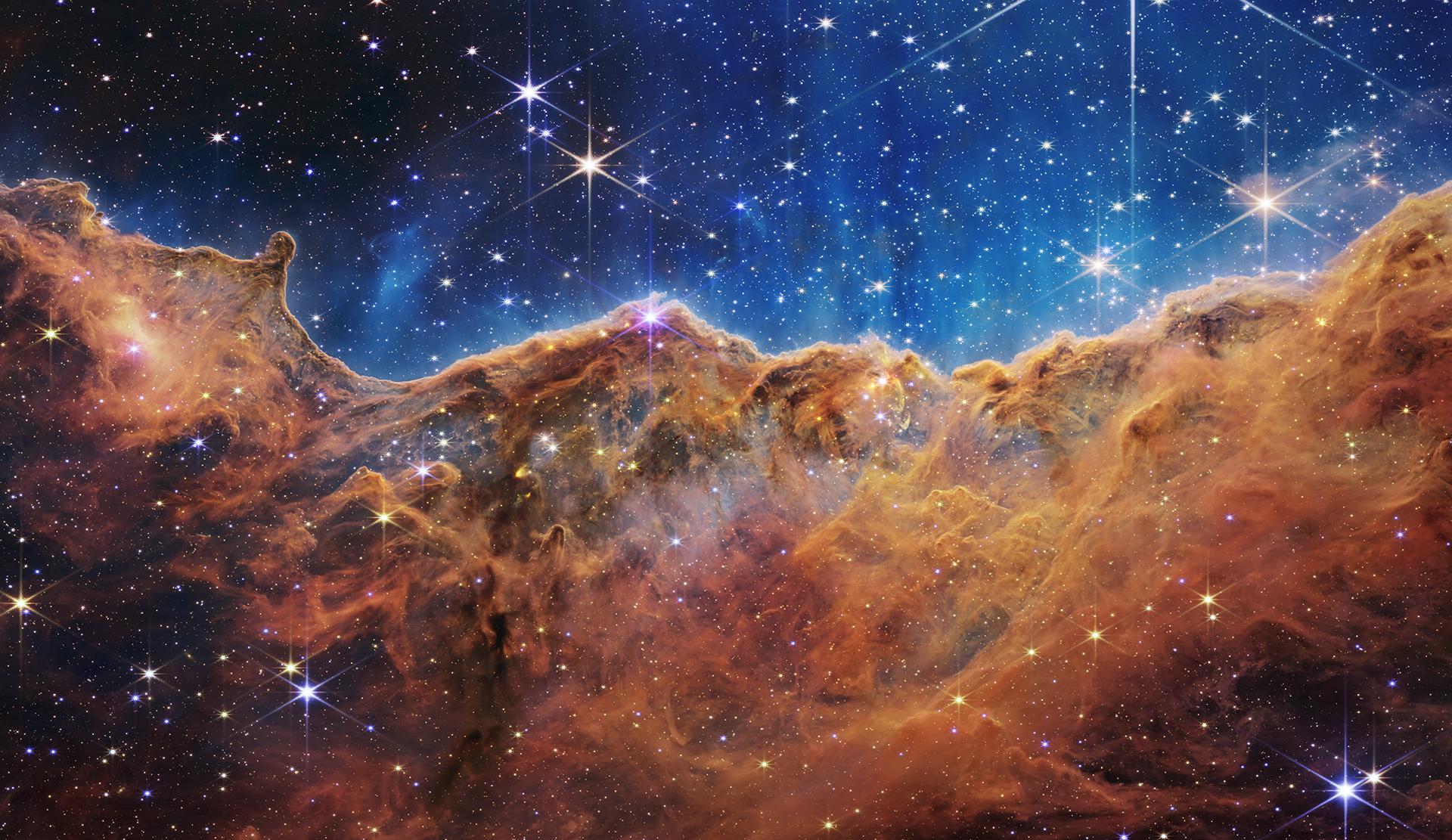
For two years, an exoplanet ninety-six light-years away sat quietly inside a folder of archived telescope data, completely invisible to the finest infrared observatory humanity has ever launched. The James Webb Space Telescope had pointed its golden hexagonal mirror toward the young star 51 Eridani, slipped a coronagraphic mask across the stellar core, and collected photons at 4.3 microns—the exact infrared band where carbon dioxide leaves its unmistakable fingerprint in a planetary atmosphere. Yet when astronomers ran standard reduction pipelines across the frames, the planet 51 Eridani b vanished beneath a wash of residual starlight. It was not absent. It was simply drowned out.
On November 4, 2026, a team led by researchers at Northwestern University alongside colleagues from Caltech, MIT, and the Space Telescope Science Institute published a study in Nature that solved the silence without altering a single bolt in space. They called their method FLIP—Physics-based Learning for Imaging Planets. Rather than relying solely on empirical reference photographs of neighboring stars to guess what glare looked like, FLIP constructs a differentiable digital twin of the James Webb Space Telescope’s entire optical train. Using the same automatic differentiation engines that train neural networks, but governed strictly by the equations of diffraction and mirror physics, the software solves for millions of microscopic thermal flexures, wavefront ripples, and segment alignments until its simulated starlight matches the telescope’s real glare down to the photon. Then it subtracts that glare away.
When the team turned FLIP loose on those two-year-old NIRCam observations, the blinding halo fell silent—and there, glowing at more than five-sigma statistical clarity in the carbon-dioxide band for the first time in history, stood 51 Eridani b. Across tests on multiple star systems, the method boosted detection sensitivity by a factor of two to fifteen. No rocket left a launchpad. No gold-plated beryllium mirror was polished in a clean room. The sky had already handed us the secret; we simply learned how to listen past the noise.
A November of Quiet Thresholds Across the Sky
Placed beside two other milestones from this same November, FLIP looks less like an isolated clever trick and more like the arrival of a new epoch in human sight. Eight days after the Nature paper, on November 12, the European Space Agency’s Euclid space telescope released its first foundational data batch, DR1-Foundation—an open survey drawn from thirteen months of watching the dark sky that catalogs more than a billion objects: over nine hundred million galaxies, sixty million quasar candidates, and fifteen thousand gravitational lenses bending ancient light around invisible webs of dark matter. Six days after that, on November 18, another Nature paper detailed how Webb caught a binary system nicknamed “Bao” in the outer disk of the Andromeda galaxy just forty-seven days after its eruption, producing humanity’s first complete real-time empirical chronicle of one star spiraling into and merging with a supergiant.
Read those three dates together—November 4, November 12, November 18—and a subtle transformation comes into focus. For four centuries after Galileo lifted a brass tube above Padua, astronomy was primarily a story of brute optical aperture: grind wider glass, climb higher mountains, hoist colder mirrors beyond Earth’s shimmering air. Aperture still matters immensely. Yet the bottleneck of modern astrophysics is increasingly interpretive. Our observatories now drink from a firehose of light so dense, faint, and overlapping that human eyes—and even classical statistical filters—cannot disentangle what is already preserved on disk. The telescope of the late 2020s is no longer merely glass and aluminum floating at Lagrange Point 2; it is a marriage of glass and differentiable physics.
“To see a faint companion beside a blinding sun is not an act of adding more brightness; it is the disciplined art of subtracting everything that shouts.”
Physics-Guided Learning vs. Hallucinated Vision
There is a deeper intellectual reassurance inside FLIP’s architecture that reaches far beyond exoplanets. Much of the public anxiety surrounding artificial intelligence stems from black-box models that invent plausible-looking textures when evidence grows thin. In astronomy, hallucination is unforgivable: a fabricated pixel is a nonexistent world. What makes FLIP remarkable is its humility. It borrows the optimization machinery of modern machine learning—gradient descent across millions of coupled variables—while refusing to let the model invent anything unconstrained by Maxwell’s equations and the physical geometry of Webb’s mirrors. Every photon it removes must obey optics; whatever survives the subtraction belongs to the universe itself.
That hybrid temperament—combining the raw search power of computation with the unyielding discipline of first-principles physics—may turn out to be the defining scientific style of the coming decade. In Euclid’s billion-galaxy archive, no human cohort could ever inspect fifteen thousand subtle Einstein rings by hand, yet neural classifiers anchored in relativistic lensing models can map the skeleton of dark energy across ten billion years of cosmic expansion. In Andromeda, rapid automated transient alerts summoned Webb’s mid-infrared gaze while the common-envelope dust around Bao was still cooling, turning a fleeting cosmic collision two and a half million light-years away into a textbook physicists can measure.
What the Telescope Teaches the Rest of Us
It is hard to study how astronomers finally caught sight of 51 Eridani b without hearing an echo of our own earthly predicament. We, too, live inside an age of blinding glare—feeds engineered to maximize luminance, forecasts pitched at maximum volume, headlines that scatter across consciousness like unmasked starlight across a detector. In such an environment, the instinctive impulse is always additive: build a louder channel, gather more alerts, consume another stream of commentary. Yet FLIP suggests the opposite wisdom. Clarity often arrives not through accumulation, but through careful, principled subtraction.
Somewhere tonight, inside terabytes of archival exposures already resting on servers in Baltimore, Madrid, and Pasadena, colder and smaller worlds than 51 Eridani b are waiting—worlds whose faint thermal whispers were recorded years ago and filed away as noise. When future space telescopes aim directly at Earth-sized planets orbiting Sun-like stars, they will confront glare ten billion times brighter than the worlds they seek. They will succeed only because we learned how to turn out the starlight without extinguishing the faint blue ember beside it. Standing beneath a clear November sky, that feels less like an engineering milestone and more like a quiet vow: that the most enduring gift of machine intelligence will not be replacing human wonder, but clearing the static so we can finally see what was shining there all along.
Continue Reading
Back to Front Page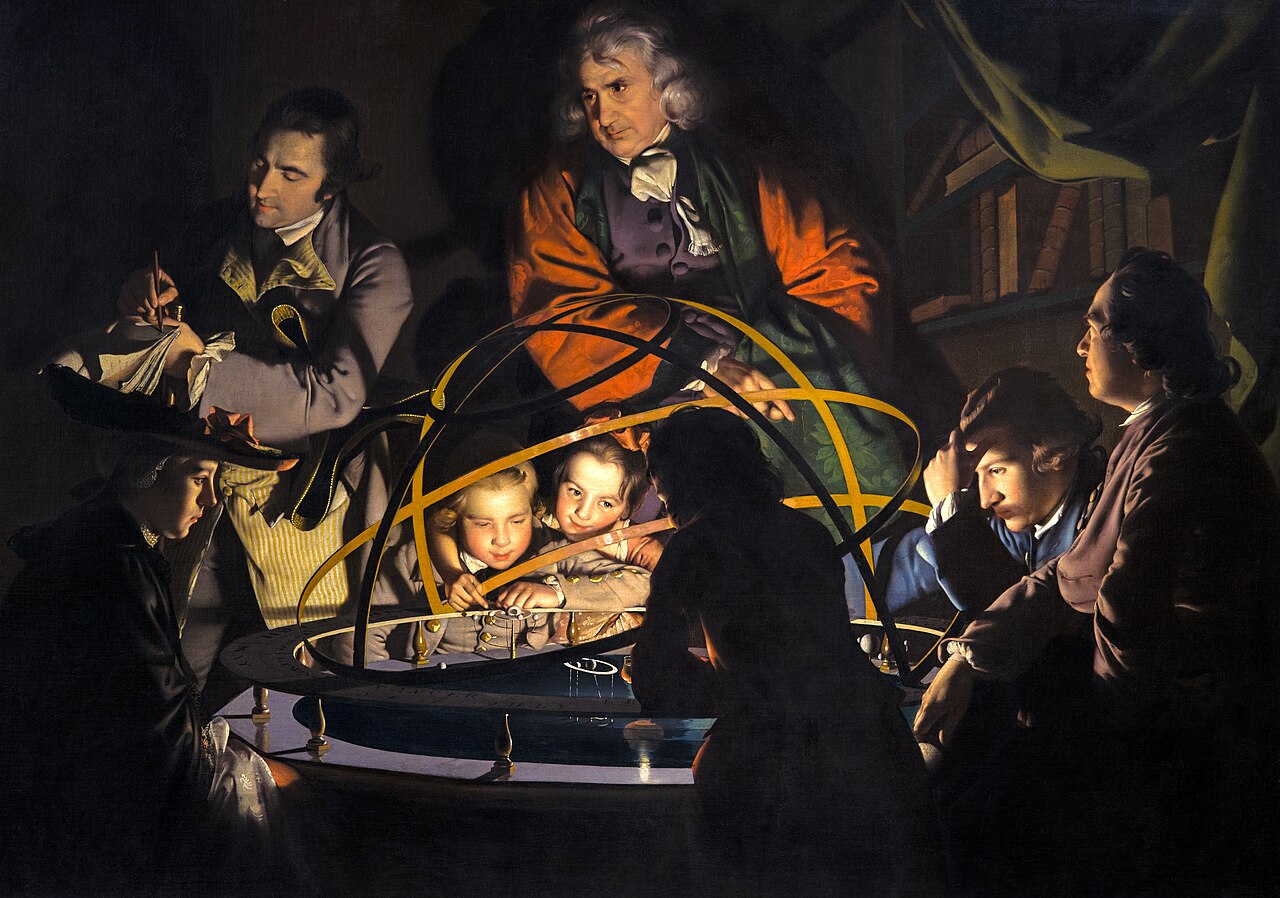
The Architecture of Quiet Intelligence
From a candlelit brass orrery in 1766 to the unfolding threshold of Super Intelligence—why the noblest instruments humanity ever builds do not shout for our attention, but illuminate the faces gathered around them.
Depth That Folds Inward
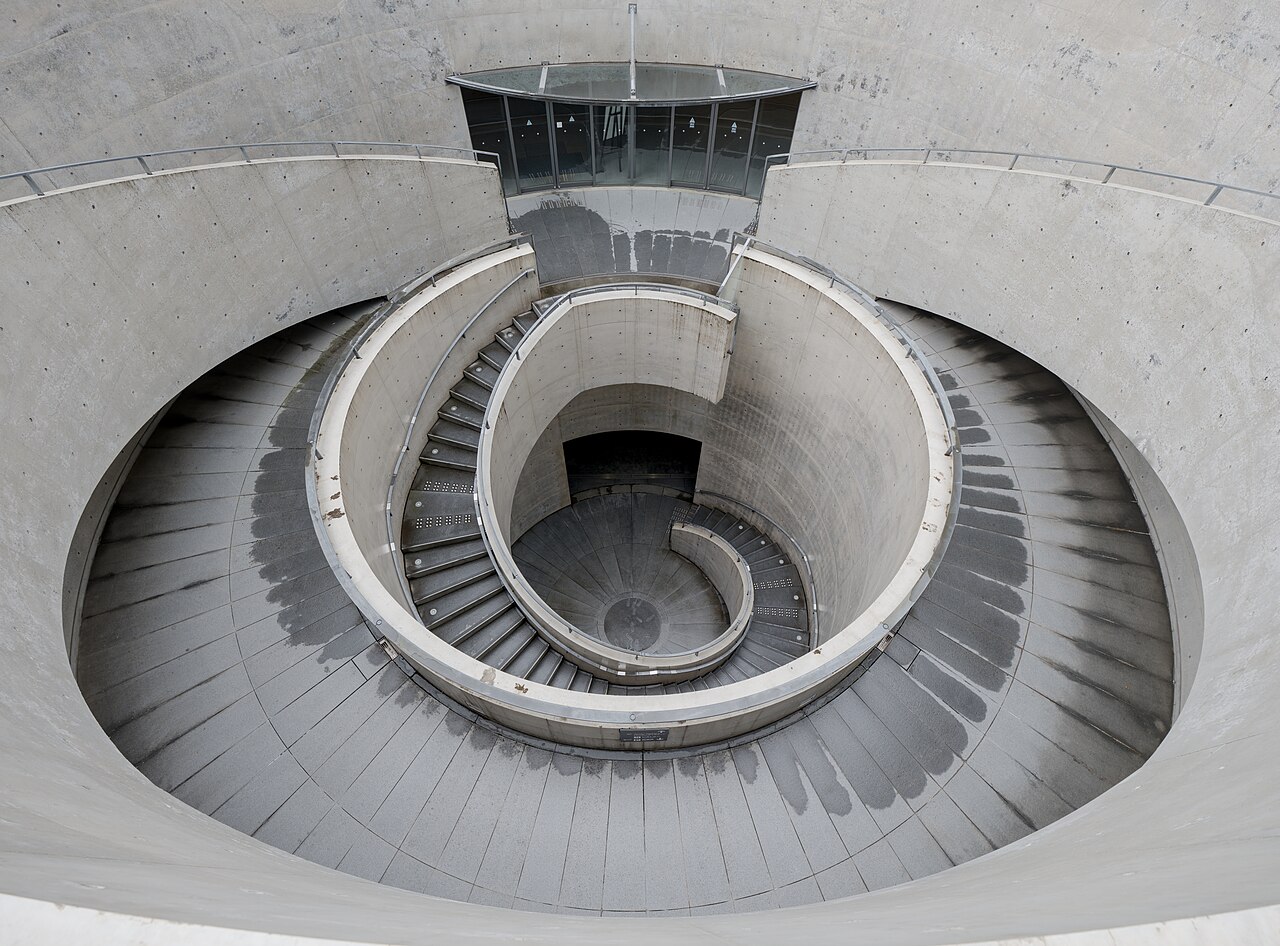
Thinking Machines Lab’s open-weights looped transformer suggests that the next frontier of artificial intelligence may come not from endlessly wider data centers, but from teaching smaller minds to pause and think twice.