The Measure of an Unhurried Hour
As autonomous agents begin carrying away the friction of modern work, humanity confronts an ancient, unexpectedly tender question: what do we choose to do with an hour that no longer asks to be optimized?
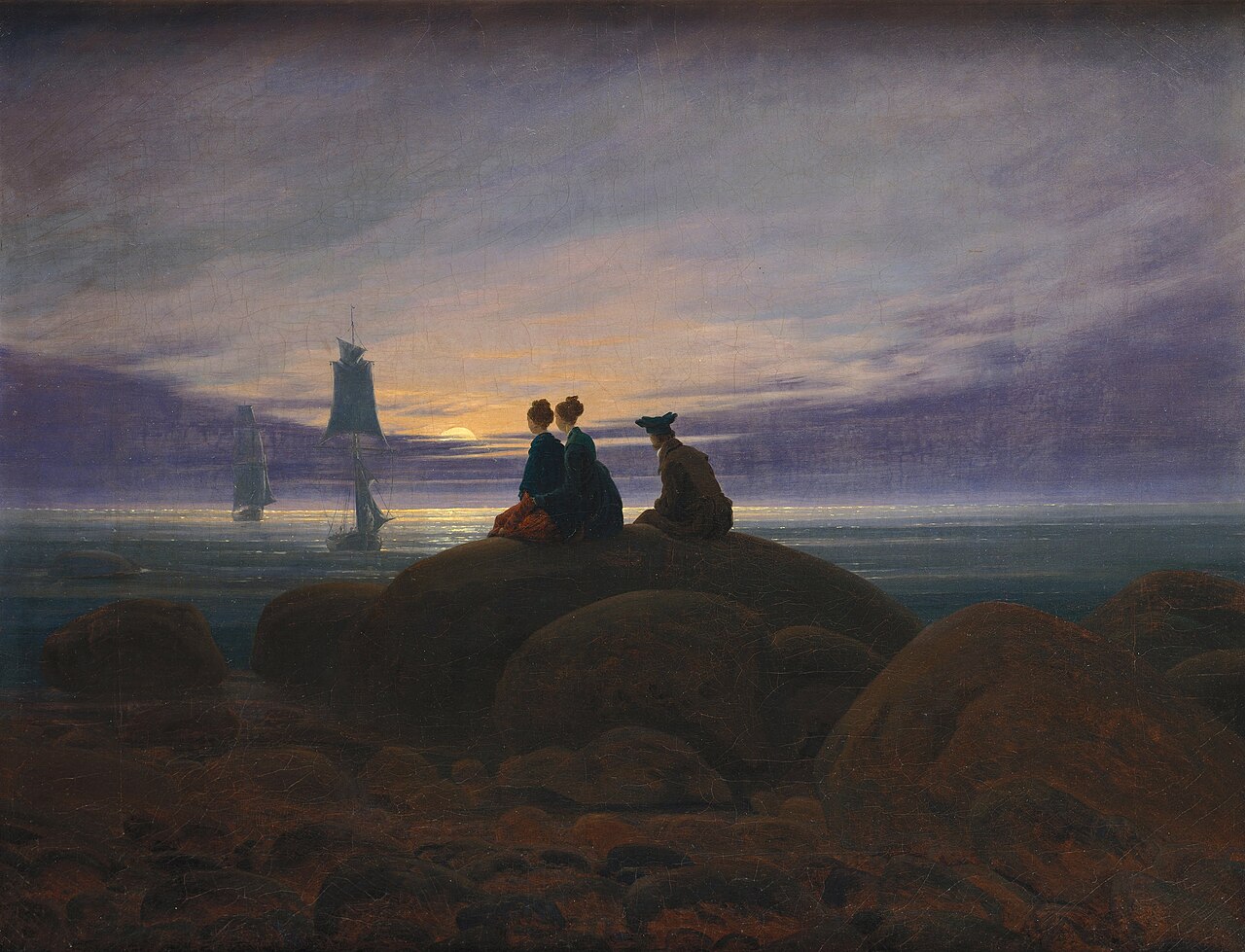
In Caspar David Friedrich’s 1822 painting Moonrise by the Sea, almost nothing happens—and that is precisely why you cannot look away. Three companions sit close together on dark coastal boulders, their backs turned toward the viewer, watching two tall ships drift silently toward shore beneath a parting veil of twilight lavender clouds. A pale amber moon sits low upon the horizon, laying a thin ribbon of silver across the Baltic water. No one is gesturing. No one is hurrying. They are simply lending their undivided attention to the fact of an evening arriving.
Look at that canvas from the vantage point of November 2026, and it feels strangely revolutionary. All year, technology headlines have chronicled the arrival of autonomous agents—background systems capable of reconciling invoices, triaging correspondence, synthesizing market briefs, writing test suites, and booking itineraries while their human principals sleep. For the first time in industrial history, the machinery of productivity is beginning to absorb not only physical repetition, but routine administrative cognition. And yet a quiet paradox trails behind every efficiency gain: the faster our tools clear our schedules, the more nervously we rush to refill the vacated hours with fresh busyness.
The Ancient Fear of an Empty Room
This restlessness is far older than silicon. Two thousand years ago, in his essay On the Shortness of Life, Seneca observed with gentle irony that human beings guard their estates and silver fiercely, yet hand away their hours to trivial errands as though time were the cheapest commodity on earth. Sixteen centuries later, Blaise Pascal went even further, remarking that nearly all of humanity’s unhappiness stems from a single inability: to sit quietly alone in a room without seeking distraction. For generations, relentless labor provided a convenient alibi. We told ourselves we would read slowly, walk beneath the trees, write honest letters, or learn the constellations as soon as the backlog finally cleared.
Autonomous intelligence is quietly dismantling that alibi. When software agents handle the friction that once consumed half a workday, we are left standing face-to-face with the raw substance of our own leisure—and forced to discover whether we still remember how to inhabit an unhurried hour without feeling guilty that it produces no measurable output.
“When is there not a moon? When are there not bamboo and cypress? Only there are rarely two unhurried souls like us.”
Su Shi’s Courtyard and the Dignity of the Unoccupied Mind
On the twelfth night of the tenth lunar month in 1083, during his exile in Huangzhou, the Song-dynasty poet Su Shi was about to go to sleep when moonlight spilled across his floor like clear water. Unable to resist its quiet summons, he rose, walked over to Chengtian Temple to wake his friend Zhang Huaimin—who was also awake—and together they strolled across the courtyard. The moonlight lay transparent as pooled water, and the shadows of bamboo and cypress drifted across the stones like submerged reeds and algae. In eighty-four Chinese characters, Su Shi captured the entire secret of human civilization: the beauty of the universe is practically free and perpetually renewed, yet it remains invisible to anyone too hurried to step into the courtyard.
Notice the phrase Su Shi chose to describe himself and his friend: xianren—literally “unhurried” or “unoccupied” people. In a culture obsessed with velocity and throughput, the word idle sounds almost like a confession of failure. In classical aesthetics, however, stillness is the fertile ground from which every genuine work of love, poetry, and philosophy grows. A machine can operate at ninety-nine percent utilization twenty-four hours a day without diminishing its essence. A human being cannot. Our deepest perceptions—recognizing the subtle grief behind a friend’s polite voice, noticing how November light slants differently across a wooden table, hearing the cadence of a sentence that will stay with someone for years—require slack, silence, and margin.
Reclaiming the Human Horizon
This is why technology alone can never complete the promise of the future. Artificial intelligence can map a billion galaxies with Euclid, loop through forty-eight layers of reasoning on a personal laptop, and help open laboratories compose gentler molecules for living cells. Those triumphs are genuinely glorious, and we should celebrate them without cynicism. Yet every one of them acquires its final meaning only when it bends back toward ordinary mortal life—toward the table set for dinner, the notebook opened beside a cool window, the unhurried walk beneath a rising moon.
If we measure the coming decade strictly by how many tasks per minute our agents execute, we will miss the richest gift standing right in front of us. The nobler metric is simpler and far older: how many hours did our machines quietly carry for us so that we might sit upon the stones like Friedrich’s three watchers, hear the tide come in beneath a twilight sky, and remember—without hurry, without spectacle—what it feels like to be alive.
Continue Reading
Back to Front Page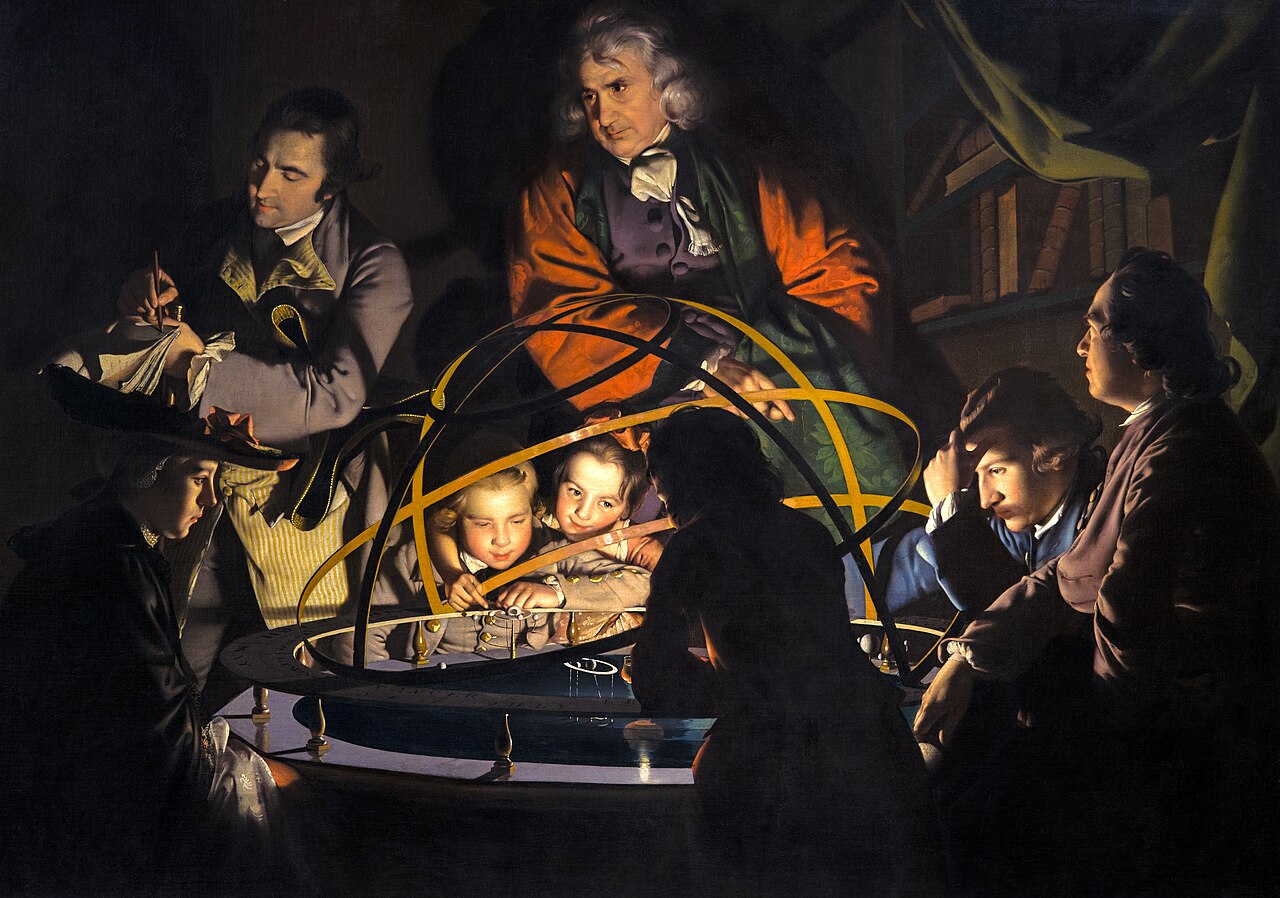
The Architecture of Quiet Intelligence
From a candlelit brass orrery in 1766 to the unfolding threshold of Super Intelligence—why the noblest instruments humanity ever builds do not shout for our attention, but illuminate the faces gathered around them.
Turning Out the Starlight
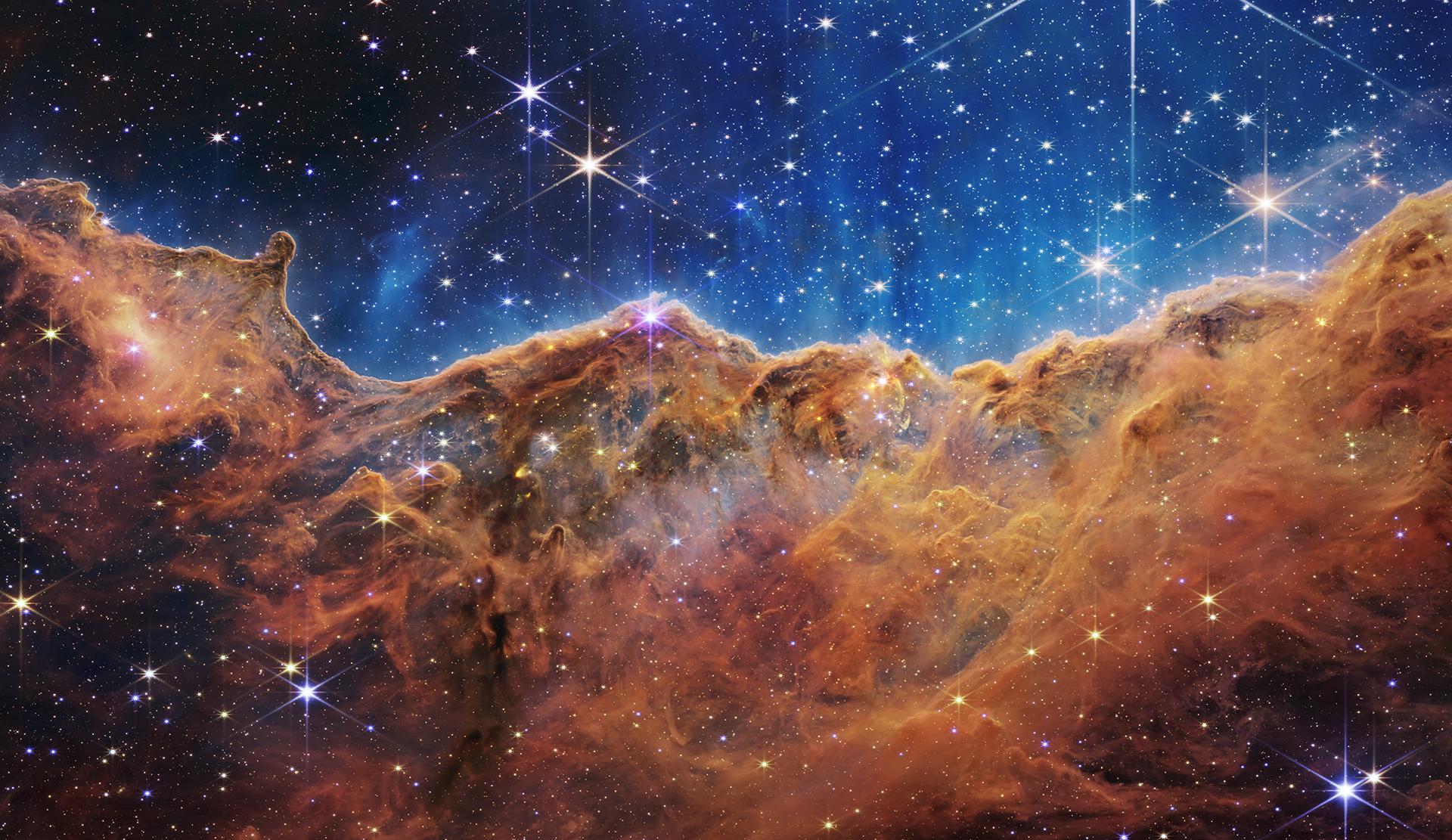
In November 2026, a physics-trained algorithm awakened a hidden exoplanet inside two-year-old Webb archives—revealing that seeing deeper into the cosmos now depends as much on subtracting glare as on building larger mirrors.